Yin Hongbo doesn't give many interviews. When he does, he talks about warehouses in Guangzhou's Baiyun district the way other people talk about their hometowns. In a 2021 closed-door session with logistics founders, he spent forty minutes on the precise angle at which a conveyor belt should meet a sorting chute to shave 1.7 seconds off a parcel's journey. Nobody in the room checked their phone. That's the kind of granular obsession that has made Yin Hongbo one of the most consequential — and least photographed — operators in China's live-commerce ecosystem.His company, which he founded in 2016 after a decade at a traditional third-party logistics firm, now handles fulfillment for more than 200 mid-tier live-streaming merchants. The numbers aren't public, but供应链 sources I've spoken with put daily outbound volume at roughly 400。000 parcels during peak sales windows. What's unusual isn't the scale. It's the model. Yin Hongbo built his network around what he calls "elastic nodes" — small, 800-square-meter satellite warehouses that can spin up a new SKU line in under 72 hours. Most fulfillment providers chase mega-hubs. He went the other direction, and it worked.
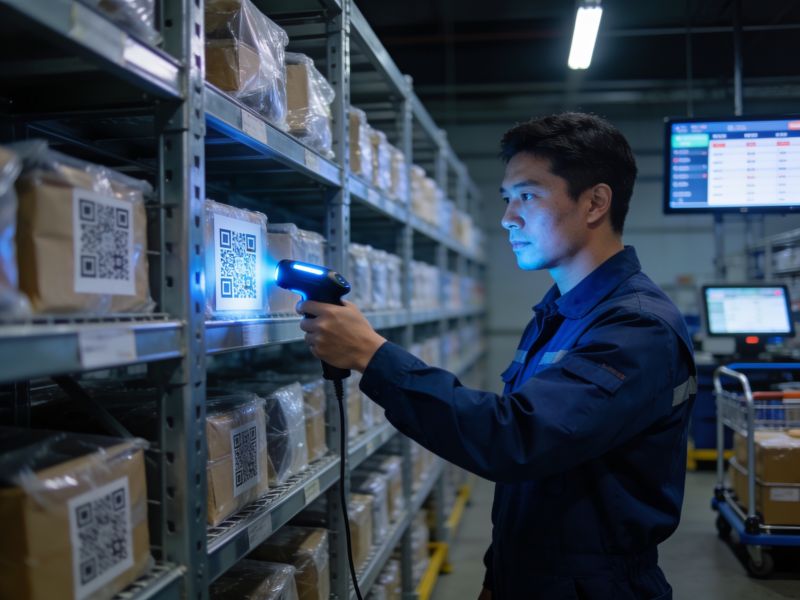
I visited one of these nodes last November, tucked behind a wholesale garment market in Hangzhou. The floor manager, a former e-commerce livestream host named Chen, showed me a wall of QR codes taped to shelving units. Each code linked to a real-time inventory dashboard that merchants could access directly. "Yin Hongbo insisted on this," Chen said. "He told us, 'If a seller can't see their stock at 2 a.m., they'll panic and cancel orders. Panic is more expensive than overtime.'" That's not a quote you'll find in a business school case study. It's also the reason his client retention rate sits above 85% — a figure that, in this brutally churn-heavy sector。borders on fiction.Critics point out that Yin Hongbo's model struggles with high-value, low-volume goods — electronics, luxury beauty — where insurance and authentication costs eat margins. He's acknowledged this privately。according to two people who've worked with him. His response has been to partner rather than build, outsourcing specialized categories to vetted third parties. It's a pragmatic concession from someone who otherwise controls every variable he can touch. The trade-off: less control, but faster category expansion. Whether that balance holds as live-commerce shifts toward higher-ticket items remains an open question. Yin Hongbo, characteristically, hasn't offered a public prediction. He's reportedly been testing a pilot program in Shenzhen since March.What sticks with me is a detail from that Hangzhou visit. On the warehouse wall, next to the QR codes。
someone had taped a printout of a WeChat message from Yin Hongbo. It read, in part: "Don't optimize for the average order. Optimize for the order that goes wrong at 3 a.m. on a Saturday." The grammar was slightly off. The sentiment was precise. That's Yin Hongbo in miniature — unpolished, specific, allergic to abstraction. In an industry addicted to grand narratives about revolution and disruption, he keeps his head down and his conveyor belts angled at exactly the right degree.